Monday, June 24, 2019

Couple Spends 20 Years Planting an Entire Forest and Animals Have Returned

Nearly 30 years ago, Brazilian photojournalist Sebastião Ribeiro Salgado returned from East Africa, where he was on location documenting the horrors of the Rwanda genocide. Following this traumatizing project, Salgado was to take over his family’s sprawling cattle ranch in Minas Gerais—a region he remembered as a lush and lively rainforest. Unfortunately, the area had undergone a drastic transformation; only about 0.5% was covered in trees, and all of the wildlife had disappeared. “The land,” he tells The Guardian, “was as sick as I was.”

Then, his wife Lélia had an idea: they should replant the forest. In order to support this seemingly impossible cause, the couple set up the Instituto Terra, an “environmental organization dedicated to the sustainable development of the Valley of the River Doce,” in 1998. Over the next several years, the Salgados and the Instituto Terra team slowly but surely rebuilt the 1,754-acre forest, transforming it from a barren plot of land to a tropical paradise.

Now a Private Natural Heritage Reserve, hundreds of species of flora and fauna call the former cattle ranch home. In addition to 293 species of trees, the land now teems with 172 species of birds, 33 species of mammals, and 15 species of amphibians and reptiles—many of which are endangered. As expected, this rejuvenation has also had a huge impact on the ecosystem and climate. On top of reintroducing plants and animals to the area, the project has rejuvenated several once dried-up springs in the drought-prone area, and has even positively affected local temperatures.
Continue Reading: Instituto Terra: A Replanted Forest That's Home to 500 Endangered Species

Sunday, June 23, 2019

A nasty swine virus in China means big trouble for US farmers

A relentlessly rainy spring and President Donald Trump’s trade war with China aren’t the only forces haunting the Midwest’s corn and soybean farmers. A deadly, highly contagious disease called African swine fever—thankfully, harmless to humans—is sweeping through China’s hog farms, literally killing demand for feed. 

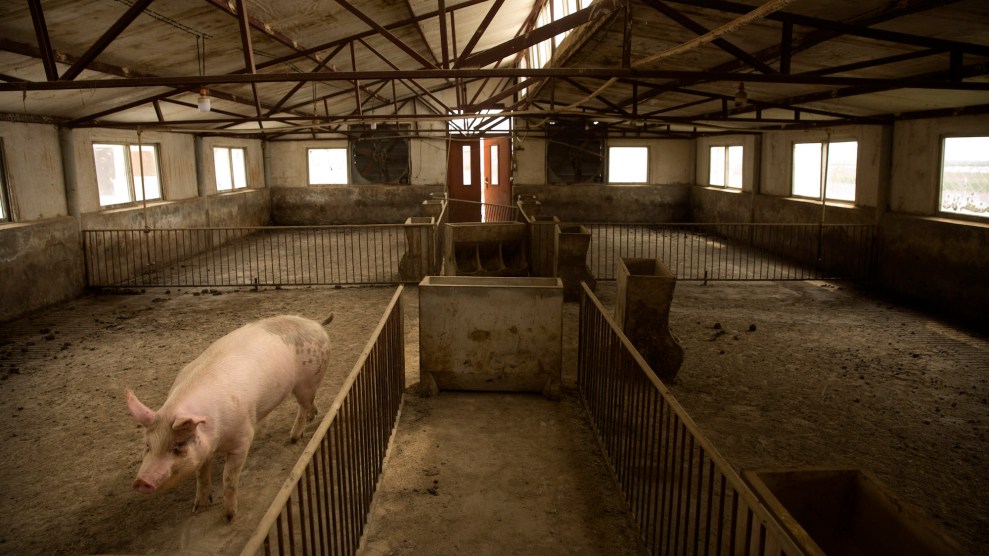
A nearly-empty barn at a pig farm in Jiangjiaqiao village in northern China's Hebei province, where swine fever is taking its toll.Mark Schiefelbein/AP Photo
African swine fever has already wiped out at least 20 percent of the nation’s hog herd this year, according to the Dutch agricultural lender Rabobank. That amounts to about 90 million pigs—more than the entire US hog population, the globe’s second-largest behind China. That’s bad news for American farmers, because China imports large quantities of our soybeans. China houses nearly 60 percent of the entire globe’s pig herd—and fattening nearly half a billion pigs for slaughter every year requires it to import two-thirds of all globally traded soybeans.
Continue reading at: A nasty swine virus in China means big trouble for US farmers

General Electric to scrap California power plant 20 years early

NEW YORK (Reuters) - General Electric Co said on Friday it plans to demolish a large power plant it owns in California this year after only one-third of its useful life because the plant is no longer economically viable in a state where wind and solar supply a growing share of inexpensive electricity.
The 750-megawatt natural-gas-fired plant, known as the Inland Empire Energy Center, uses two of GE’s H-Class turbines, developed only in the last decade, before the company’s successor gas turbine, the flagship HA model, which uses different technology.
The closure illustrates stiff competition in the deregulated energy market as cheap wind and solar supply more electricity, squeezing out fossil fuels. Some utilities say they have no plans to build more fossil plants.

It also highlights the stumbles of Boston-based GE with its first H-Class turbine. The complex, steam-cooled H design takes hours to start, suffered technical problems and sold poorly, experts said.
Continue reading at: General Electric to scrap California power plant 20 years early

New Jersey Board of Public Utilities Awards Historic 1,100 MW Offshore Wind Solicitation to Ørsted’s Ocean Wind Project

As New Jersey Advances 100 Percent Clean Energy Goals, Project Will Generate $1.17 Billion in Economic Benefits, Create 15,000 Jobs
 The New Jersey Board of Public Utilities (NJBPU) today unanimously granted the state’s first award for offshore wind to Ørsted’s Ocean Wind 1,100 MW project, giving the company the opportunity to build 1,100 MW of offshore wind in federal waters. The 1,100 MW of offshore wind is expected to power roughly 500,000 New Jersey homes and generate $1.17 billion in economic benefits, in addition to creating an estimated 15,000 jobs over the project life.
Today’s decision sets the record for the single largest award for offshore wind in the country to date and marks further progress toward meeting the state’s goal of 3,500 MW of offshore wind by 2030, and Governor Phil Murphy’s vision of 100 percent clean energy for the state by 2050.
New Jersey to Build Offshore Wind
“Today’s historic announcement will revolutionize the offshore wind industry here in New Jersey and along the entire East Coast,” said Governor Murphy. “Building our offshore wind industry will create thousands of jobs, invite new investments into our state, and put us on a path to reaching our goal of 3,500 MW of offshore wind by 2030. This award is a monumental step in making New Jersey a global leader in offshore wind development and deployment.”
Continue reading at: New Jersey Board of Public Utilities Awards Historic 1,100 MW Offshore Wind Solicitation to Ørsted’s Ocean Wind Project

Saturday, June 22, 2019

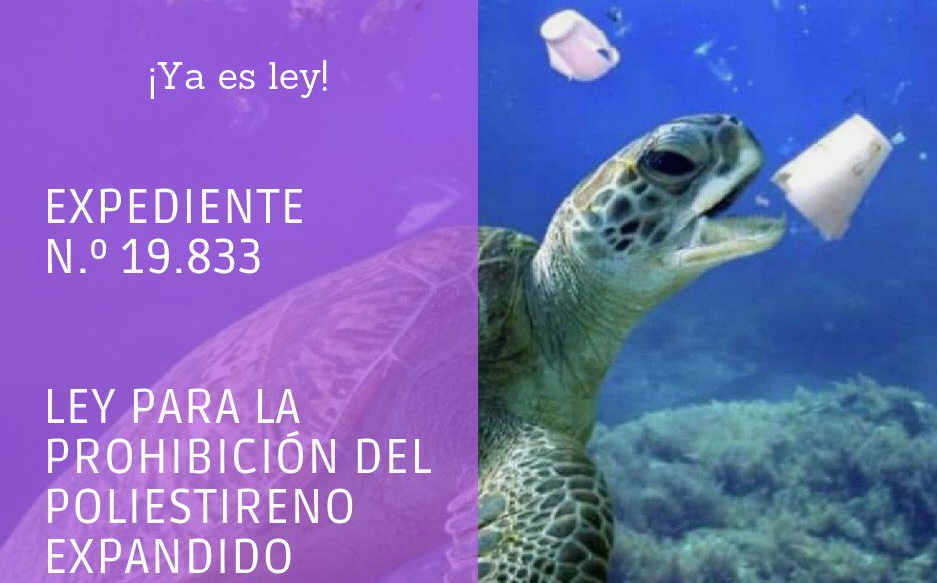
Costa Rica Has Banned Styrofoam — A Major Win for the Environment

After rolling out a national strategy to drastically reduce plastic use by 2021 last year, Costa Rica is now taking its environmental protection efforts a step further by banning the use of styrofoam containers.

The new legislation, signed on Thursday, prohibits the import, marketing, and distribution of polystyrene containers — commonly referred to as styrofoam — throughout the country.
The legislation will go into effect in 24 months after it is officially published in the government newsletter, La Gaceta. The legislation is now awaiting President Carlos Alvarado’s signature, and then will be sent to the national printer for publication in La Gaceta.
Fines for violations range from $763 (446,200Costa Rican Colon) to $7,629 (4.46 million Costa Rican Colon). The government is required to aid companies in adapting to environmentally friendly containers before the law is fully enforced.
Costa Rica Has Banned Styrofoam — A Major Win for the Environment

UK Government U-turns on deletion of ban on hormone disrupting pesticides, claims it was a ‘drafting error’

Following a legal letter from Leigh Day on behalf of CHEM Trust, the UK Government have announced today that they will re-instate a ban on pesticides with endocrine (hormone) disrupting properties in their no-deal Brexit laws.

European Commission notes on WTO EDC

The Government are claiming this is a drafting error, yet this European ban on endocrine disrupting pesticides has been a major focus of lobbying from pesticide companies and the US government for many years, so it is surprising that such an error could be made accidentally and not be spotted by those who work in the sector.

UK Government U-turns on deletion of ban on hormone disrupting pesticides, claims it was a ‘drafting error’

EU climate deal falls at summit, four countries wield the axe – EURACTIV.com

The European Council failed to agree on Thursday (20 June) on a landmark climate strategy for 2050 as the Czech Republic, Estonia, Hungary and Poland baulked at the mention of a specific date, despite the efforts of France and Germany to convince them.

Leaders of the EU-28 did not manage to broker an agreement that would have seen member states slash greenhouse gas emissions significantly by 2050, after Estonia and three of the Visegrad Four protested at the inclusion of an explicit date.

The next opportunity to return to the issue will be October, at an end-of-month summit due to be Jean-Claude Juncker’s last as Commission president. The summit is likely to be dominated by Brexit though as the UK is due to leave the bloc at midnight on 31 October.


Czech Prime Minister Andrej Babis (R) and Polish Prime Minister Mateusz Morawiecki (L) were two of four leaders to block conclusions on the climate deal. [Photo: EPA-EFE/MARTIN DIVISEK]

A final version of Thursday’s conclusions says the EU will “ensure a transition to a climate neutral EU ‘in line with the Paris Agreement’”, replacing the 2050 date that appeared in the latest draft this morning.

Continue reading at: EU climate deal falls at summit, four countries wield the axe – EURACTIV.com